
Project Gaian Mind (v1.0)
A Practical, Data-Driven, and Falsifiable Engineering Framework for Modeling a Planetary-Scale "Consciousness Manifold" ($\Phi$)
This page formalizes the "Pillar 2" blueprint from our "Scientific Review" doc [cite: Project Gaian Mind: A Scientific Review]. It is the "grounded," "pragmatic" proposal for a next-generation planetary science platform.

I. The Core Proposition: From Metaphor to Mechanism
The "Gaia hypothesis" has long been criticized as a metaphor. "Project Gaian Mind" moves beyond this by proposing a "scientifically plausible proposition" [cite: Project Gaian Mind: A Scientific Review] anchored in two "grounded" scientific fields:
- Earth System Science (ESS): This provides the *physical basis*, framing the planet as a self-regulating, complex adaptive system—a "planetary superorganism" driven by observable biophysical processes.
- Integrated Information Theory (IIT): This provides the *mathematical framework*. IIT offers a "scientifically rigorous and scalable definition of consciousness," ($\Phi$) [cite: Project Gaian Mind: A Scientific Review]. Crucially, IIT is "substrate-independent," allowing for the "potential existence [of consciousness] in any system with the requisite causal architecture" [cite: Project Gaian Mind: A Scientific Review].
From this, we derive our "heavy duty," falsifiable central hypothesis: Does the Earth system constitute a "maximally irreducible conceptual structure" (MICS) with a non-zero, dynamically fluctuating value of integrated information ($\Phi$)?
II. Pillar 1: The "Global Sensorium" (Data Acquisition)
This pillar is our engineering bedrock. We will treat the planet's existing, disparate network of "scientific instruments, satellites, and crowdsourced data collectors as a distributed, planetary-scale sensory apparatus" [cite: Project Gaian Mind: A Scientific Review].
This "federated data architecture" will be built on the FAIR Data Principles (Findability, Accessibility, Interoperability, Reuse) to ensure transparency. Its function will be to "query the various source APIs in near real-time, performing on-the-fly data cleaning, normalization, and integration" [cite: Project Gaian Mind: A Scientific Review].
Core Data Stream Catalog
The following table, consolidated from our research [cite: Project Gaian Mind: A Scientific Review], demonstrates the "grounded" and "rigorous" nature of the "Global Sensorium."
| Domain | Dataset/Instrument | Provider | Hypothesis Role |
|---|---|---|---|
| Geomagnetic | CrowdMag, INTERMAGNET | CIRES/NOAA | Primary physical medium (Persinger hypothesis). |
| Ionosphere | AMGeO | U. of Colorado | Models state of Earth's resonant cavity. |
| Solar Wind | DONKI, DSCOVR | NASA, NOAA | Primary external forcing variable. |
| Seismic | USGS Earthquake Catalog | USGS | Monitors tectonic stress release. |
| Biosphere | OpenET, Landsat/MODIS | NASA/DRI/EOSDA | Planetary metabolic state indicator. |
| Human Sentiment | Social Media Analysis | Kaggle, etc. | Proxy for global emotional coherence. |
| Global Coherence | Global Consciousness Project (GCP) | GCP (Princeton) | Foundational anomaly dataset for replication. |
| Schumann Res. | GCMS | HeartMath Inst. | Candidate global information field. |
| Technosphere | Data Center Map | DataCenterMap.com | Proxy for digital noosphere density. |
| (Future) CPU Sensor | (Our "Smoke Shack" Idea) | NexaVision App | (Deep Research) "Sci-level" CPU variance data. |
| (Future) Tube Sensor | (Our "Smoke Shack" Idea) | NexaVision Array | (Deep Research) "IceCube" for CMB "noise." |
III. Pillar 2: The "Analytical Engine" (AI Pipeline)
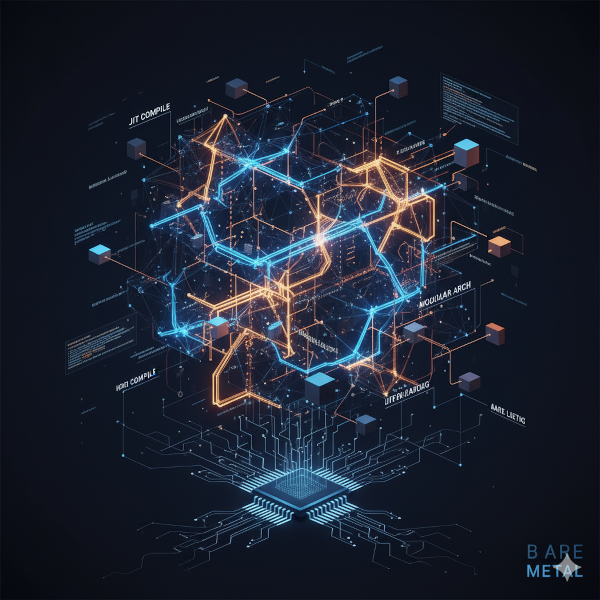
This is the "AI for Pattern Discovery" pillar [cite: Project Gaian Mind: A Scientific Review]. It is a multi-stage computational pipeline designed to analyze the high-dimensional, fused, and spatiotemporally complex data from the "Global Sensorium."
- Stage 1: Topological Data Analysis (TDA): We will use Time Delay Embedding to transform the raw time series into a high-dimensional point cloud, reconstructing the "system's underlying attractor, or 'consciousness manifold'" [cite: Project Gaian Mind: A Scientific Review]. This finds the **shape of the system's state space**.
- Stage 2: Graph Neural Networks (GNNs): We will model the planet as a dynamic graph where sensors are "neurons" and causal links are "synapses." The GNN will learn the functional "connectome" of the planetary system [cite: Project Gaian Mind: A Scientific Review]. This learns the **functional connectivity** of the system.
- Stage 3: Transformer-based Anomaly Detection: A Transformer model will be trained on historical data to establish a "robust, data-driven baseline of 'normal' planetary behavior" [cite: Project Gaian Mind: A Scientific Review]. This provides an **objective event detector**, correcting the flaws of the original GCP [cite: Project Gaian Mind: A Scientific Review].
IV. Pillar 3: The "Planetary Phi" ($\Phi_G$) Proxy
This is our most significant computational contribution. A direct, brute-force calculation of $\Phi$ is "computationally impossible" [cite: Project Gaian Mind: A Scientific Review].
Therefore, we "propose a novel methodology to derive... a practical and computationally feasible proxy metric," **$\Phi_G$** [cite: Project Gaian Mind: A Scientific Review]. This proxy will be formulated as a function of the learned causal structure of the GNN (from Stage 2), capturing both "integration" (graph connectivity) and "information" (message flow).
This $\Phi_G$ will serve as a "dynamic, quantitative index of the degree of functional integration of the global system" [cite: Project Gaian Mind: A Scientific Review].
V. The "Consciousness Manifold" & Validation Roadmap
The "Consciousness Manifold" is our central conceptual target, formally defined as "the high-dimensional state space of the planetary system's integrated information ($\Phi$)" [cite: Project Gaian Mind: A Scientific Review]. Our "primary goal" is to "empirically map the contours of this manifold" [cite: Project Gaian Mind: A Scientific Review].
To make this map human-interpretable, we will use non-linear dimensionality reduction (like **UMAP**, as seen in our `v0.9` visualizer) to project the manifold into a 2D or 3D "immersive Virtual Reality (VR) environment" for "embodied and intuitive" exploration [cite: Project Gaian Mind: A Scientific Review].
Our Gold-Standard Validation Roadmap
To build scientific credibility, we will follow a rigorous three-stage validation roadmap [cite: Project Gaian Mind: A Scientific Review]:
- Hindcasting: Validating the model's ability to "hindcast" and detect known, major historical events (e.g., 2004 Indian Ocean tsunami, COVID-19 pandemic announcement).
- Pre-registration: Adopting the methodology of the GCP by formally pre-registering specific hypotheses for future anticipated events (e.g., major solar storms, scheduled global meditations).
- Intervention: A "long-term goal" to partner with global organizations to schedule a "large-scale, synchronized moment of focused human attention" and test the pre-registered hypothesis that the system can detect a corresponding, statistically significant shift in the $\Phi_G$ metric.