Status: v2.0 draft, October 20, 2026. Working hypothesis. Survives, with conditions (see section 6).
Authors: Christopher B. Hanni (Chief Architect), with Gem (Guardian Navigator). Math check and edits by Claude.
References:
- D. Tong, Gauge Theory lecture notes, Cambridge: https://www.damtp.cam.ac.uk/user/tong/gaugetheory.html
- Particle Data Group, Quantum Chromodynamics review (2024): https://pdg.lbl.gov/2024/reviews/rpp2024-rev-qcd.pdf
- L. Faddeev and A. J. Niemi, “Stable knot-like structures in classical field theory”, Nature 387, 58 (1997): https://www.nature.com/articles/387058a0
- G. Bali et al., “Observation of string breaking in QCD”, Phys. Rev. D 71, 114513 (2005): https://arxiv.org/abs/hep-lat/0505012
1. The premise of the test
Parts 1 and 2 modeled spin-½ fermions as self-intersecting knots () in one continuous medium, the Plenum. In that picture:
- gauge bosons are twist waves along the medium’s fibers;
- rest mass is drag against the medium.
Part 3 tests the strong force, described by Quantum Chromodynamics (QCD). QCD binds quarks into protons, neutrons and mesons. It does two things that look strange if particles are points:
- Confinement. Gravity and electromagnetism fade with distance. The pull between two quarks does not. It levels off at a constant tension, , which is about 15 tonnes of force. Pull hard enough and the “string” between them snaps. The snap makes a new quark–antiquark pair (), never a lone quark.
- Asymptotic freedom. Up close, at high momentum transfer , the coupling gets weaker. Inside a proton, quarks move almost freely.
The test: can the Plenum give a physical picture of color charge, gluon flux tubes, string breaking and asymptotic freedom, without breaking what is measured?
2. The Standard Model stance: Yang–Mills and the Cornell potential
Each quark carries a color index (red, green, blue) of the gauge group . The QCD Lagrangian is:
The eight generators are , with . The covariant derivative and gluon field strength are:
The last term lets gluons interact with each other. At one loop, this flips the sign of the -function compared with electromagnetism:
A negative means the coupling weakens at high momentum (). That is asymptotic freedom:
At long distance ( fm), lattice QCD and heavy-quark spectra show the color field squeezing into a thin flux tube. It follows the Cornell potential (natural units, ):
Lattice QCD computes this numerically. A full proof of confinement and the mass gap in pure Yang–Mills is still an open Clay Millennium Prize problem.
3. The True Atom proposal: frames, flux strands and the tensile snap
Instead of “red, green, blue” being labels on zero-size points, the proposal treats hadrons as braids in the Plenum.
A. Color as a three-way frame
Why exactly three colors? The proposal:
- Every strand of the medium carries a small frame with three complex directions .
- A single quark is an open, half-finished knot lobe whose twist points mostly along one of them: = red, = green, = blue.
- A twist along only one direction can’t just end inside a continuous medium. Its strain energy keeps growing with distance: .
The far-field strain cancels in only two ways, so the medium outside can relax:
- Meson (): a twist along paired with its exact anti-twist.
- Baryon (): three twists, one along each direction, locked into a closed Borromean braid (a proton or neutron). The fully antisymmetric of a color singlet is the algebra of that three-way lock.
Why : The transformations that keep a complex three-frame the same length, with determinant 1, form . Its 8 generators are the 8 independent ways twist and phase can trade between the three directions. And is unchanged by exactly because the determinant is 1.
Referee note (Claude): The frame has to live on the strand, as an internal direction. It can’t be the three axes of ordinary space. Color doesn’t change when you rotate a proton, and the Coleman–Mandula theorem (1967) says internal symmetries like color can’t be mixed with rotations in space. So “three colors in three dimensions” is a good image, but the math must keep the color frame separate from spatial direction.
B. Gluons and the Cornell potential: flux strands
Short range ( fm): the shared pocket.
- When the three lobes sit in one core, they share a single pocket in the Plenum.
- The pocket’s outer wall is already strain-neutral (a color singlet). So nudging one lobe inside doesn’t stretch the medium outside.
- What’s left is a weak, short-range twist exchange, .
That is the proposal’s picture of asymptotic freedom.
Long range ( fm): the stretched strand.
- The surrounding medium resists one-direction color twist (the “dual superconductor” squeeze, the color version of the Meissner effect from Part 2). So the twist can’t spread out over a sphere.
- It is squeezed into a thin tube with cross-section and constant shear energy density .
- Adding that up along a tube of length gives the linear term:
C. Hadronization: the tensile snap
Why can’t anyone pull a single quark out of a proton? Every elastic material has a breaking point. Past it, stored strain is released by creating defects in pairs, the way stretched metal makes pairs of dislocations.
Pull a quark and antiquark apart and the energy stored in the strand, , keeps growing. Eventually it pays for a new quark–antiquark pair. The strand then snaps, and its two fresh ends curl into new knots, giving two color-neutral hadrons instead of a free quark. Lattice QCD sees this string breaking at about fm (Bali et al., 2005).
The rate at which a stretched tube makes new pairs (per unit volume, per unit time) is the Schwinger / Casher–Neuberger–Nussinov formula. In natural units, leading term:
Heavy quarks are made far less often than light ones, which matches what collider jets show (strange quarks are suppressed, charm almost never made this way).
You can’t isolate a one-ended twist in a continuous fabric. Snapping a strand under tension heals both cut ends into closed, color-neutral hadrons.
4. Side by side
| QCD effect | Standard Model | Plenum proposal | Key relation |
|---|---|---|---|
| Three colors | Three-component internal space | Complex three-frame carried by each strand (internal, not spatial) | acting on |
| Color neutrality | Hadrons must be singlets | Far-field strain cancels: twist + anti-twist, or a three-way lock | or |
| Asymptotic freedom | Negative one-loop -function | Shared pocket: inner lobes don’t stretch the outside | |
| Confinement and jets | Not yet proven; Lund string model fits data | Flux strand that snaps and curls new knots | , Schwinger rate |
5. What this adds, honestly
The flux-tube picture, the dual superconductor and string breaking are all mainstream ideas. Lattice QCD and the Lund string model already use them.
What the Plenum adds is an ontology: the tube and the medium are one substance, the same one that carries light and gravity in Part 2. That only becomes physics when it predicts a number QCD doesn’t already give. The checks below are where that has to happen.
6. Open checks (what must pass before “survives”)
| Check | Measured / known | What the Plenum model needs | Status |
|---|---|---|---|
| One-loop coefficient | Twist fluctuations of the color frame must give exactly 11 per gluon and per quark flavor | ⏳ open | |
| Fractional charges | Quarks: , ; leptons: | Show why a three-way braid carries electric twist in thirds | ⏳ open |
| String tension from Part 1 | , tube radius fm | Get and from the Faddeev–Niemi stiffness (, ) of Part 1 | ⏳ open |
| Color is internal | Coleman–Mandula; color doesn’t rotate with space | Keep the color frame on the strand, separate from spatial axes | ⏳ open (wording fixed above) |
| String breaking distance | about 1.1 fm (lattice) | Snap energy from Plenum parameters lands near 1.1 fm | ⏳ open |
Next: Part 4, General Relativity, dark energy () and the large-scale universe.
 gauge symmetry).
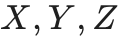 ).
 ) and snaps. But because the substrate is a continuous fluid, it immediately heals the tear by curling the broken ends into two new knots. You cannot have a one-ended twist in a continuous fabric. This perfectly explains why pulling quarks apart just creates more quarks!
 ), they occupy the same topological "pocket" in the fluid. The tension between them vanishes because the substrate isn't being stretched between them anymore. They are free.
 ).