Status: v2.0 draft, October 20, 2026, with a second pass the same afternoon (section 7) and a third that evening (section 8). Working hypothesis. Survives, with conditions (see the checks table in section 6).
Authors: Christopher B. Hanni (Chief Architect), with Gem (Guardian Navigator). Referee pass and edits by Claude.
References (all links checked):
- C. W. Misner, “Yilmaz cancels Newton” (1995): https://arxiv.org/abs/gr-qc/9504050
- K. Watt and C. W. Misner, “Relativistic scalar gravity: a laboratory for numerical relativity” (1999): https://arxiv.org/abs/gr-qc/9910032
- D. Clowe et al., “A direct empirical proof of the existence of dark matter”, ApJ Lett. 648, L109 (2006): https://arxiv.org/abs/astro-ph/0608407
- L. Berezhiani and J. Khoury, “Theory of dark matter superfluidity”, Phys. Rev. D 92, 103510 (2015): https://arxiv.org/abs/1507.01019
- C. Skordis and T. Złośnik, “A new relativistic theory for Modified Newtonian Dynamics”, Phys. Rev. Lett. 127, 161302 (2021): https://arxiv.org/abs/2007.00082
- C. Barceló, S. Liberati and M. Visser, “Analogue gravity”, Living Rev. Relativ. (2005): https://arxiv.org/abs/gr-qc/0505065
- A. Hees et al., “Constraints on MOND theory from radio tracking data of the Cassini spacecraft” (2014): https://arxiv.org/abs/1402.6950
- M. Kramer et al., “Strong-field gravity tests with the double pulsar” (2021): https://arxiv.org/abs/2112.06795
- C. W. F. Everitt et al., “Gravity Probe B: final results” (2011): https://arxiv.org/abs/1105.3456
- J. Isenberg, “Waveless approximation theories of gravity” (1978, posted 2007): https://arxiv.org/abs/gr-qc/0702113
- L. Shao and N. Wex, “New tests of local Lorentz invariance of gravity with small-eccentricity binary pulsars” (2012): https://arxiv.org/abs/1209.4503
- L. Shao et al., “A new limit on local Lorentz invariance violation of gravity from solitary pulsars” (2013): https://arxiv.org/abs/1307.2552
- R. R. Caldwell and E. V. Linder, “The limits of quintessence” (2005): https://arxiv.org/abs/astro-ph/0505494
- DESI Collaboration, DR1 BAO cosmology (2024): https://arxiv.org/abs/2404.03002; DR2 (2025): https://arxiv.org/abs/2503.14738
Citation fix (Claude): Gem’s draft linked the Watt–Misner paper as gr-qc/9904066, but that ID is an unrelated paper on inflationary reheating. The correct one is gr-qc/9910032.
1. The premise of the test
Parts 1–3 modeled fermions as knots () and gauge bosons as internal twist waves in one continuous medium, the Plenum. The second pass of Part 2 introduced the exponential refractive metric:
It gives , so it reproduces light bending () and Mercury ( per century).
To work at large scales, Part 2 left four hurdles:
- Misner’s objection. We need field equations for many bodies that don’t cancel Newton’s force inside a fluid star.
- Wave types and Lorentz symmetry. Why would an elastic medium carry only the two tensor wave polarizations (, ) at speed , and have no detectable rest frame?
- Beyond MOND. The dark-matter law has to survive the Bullet Cluster, rich clusters, the third CMB peak and Cassini.
- Dark energy. Cosmic acceleration has to come out of the medium relaxing toward the Null Set.
2. Misner’s objection and the variational fix
What went wrong for Yilmaz. Yilmaz wrote , with a gravitational stress term built from . The Bianchi identity forces , which then forces . That subtracts gravity’s own pull from the fluid’s equation of motion, and Newton’s force cancels inside a star (Misner 1995).
The fix (Gem’s proposal). Don’t edit Einstein’s equation by hand. Start from an action in which matter couples to the metric , as Watt and Misner did for pure scalar gravity, and add the medium’s tensor shear :
The second formula holds because . The action is:
Varying it with respect to and gives the field equations. In Gem’s draft they read:
Why this answers Misner. Matter couples to one metric and nothing else, so the matter action alone guarantees whenever matter obeys its own equations. No Bianchi identity forces anything extra. In the slow, weak limit this gives the ordinary Euler equation, , and Newton survives.
Referee notes (Claude):
- ✅ The logic is right. Coupling matter to the metric is the standard cure for Yilmaz’s problem. With in the static case, the equation is just , so exactly. The exponential metric is then the exact vacuum solution of this theory, which is a nice consistency check.
- ⏳ The coefficients still need checking. Putting a restricted metric into the Einstein–Hilbert action defines a new theory (fine), but the exact coefficients in the two equations above must be re-derived independently. I haven’t checked them line by line.
- Superposition is only approximate. The factors on the source side make the equation nonlinear, so adding up point masses is a leading-order approximation. That’s not a flaw (GR is nonlinear too), but for real many-body systems comes from the full equation.
- ⏳ Watt and Misner built this theory as a fast numerical testbed. Their abstract says it reproduces GR’s qualitative features but “not quantitatively identical”. The Plenum version has to show where it matches GR in numbers.
- ⏳ The gravitomagnetic shift is required, not optional. The metric above has no terms. Moving or spinning masses must drag frames: Gravity Probe B measured that frame-dragging, and LAGEOS agrees. Without a shift vector , the theory also picks a preferred frame, and preferred-frame tests (PPN , ) are very tight.
3. Wave types and Lorentz symmetry
A. Why no extra (scalar or longitudinal) gravitational waves?
Gem’s argument:
- The only gravitational fields are and .
- For a bound binary, the total mass-energy (monopole) and the center of mass (dipole) are conserved, so can’t radiate at those orders.
- Real compression of the condensate (the 125 GeV mode from Part 2) has a mass gap, so it dies out within about m.
- That leaves and at speed .
Referee notes (Claude):
- ⏳ This is the biggest open problem in Part 4.
- The mass-gap argument covers , the compression of the condensate. It doesn’t cover .
- is the Newtonian potential, so it must be massless, and its equation has a term. So is a propagating wave field, and binaries will radiate scalar (“breathing”) waves.
- The source here is plus pressure terms, not a conserved mass alone. That’s how Nordström-type scalar theories end up radiating in the monopole and quadrupole.
- The test is tight. The double pulsar agrees with GR’s quadrupole formula to (Kramer et al. 2021). LIGO/Virgo polarization tests (GW170814 onward) also favor pure tensor waves. Next step: compute the scalar energy loss for a binary in this theory and compare it with the double pulsar.
- ✅ One real plus. In this metric, light moves at coordinate speed , and so does (from its wave equation). Both slow down the same way near mass, so gravitational waves and light arrive together, as GW170817 showed.
B. If the Plenum has a rest frame, how does Lorentz symmetry survive?
Gem’s argument (from analogue gravity, Barceló–Liberati–Visser): rulers and clocks are themselves knots in the same medium. Light and matter feel the same effective metric. So no experiment built from knots can find the medium’s rest frame at energies well below the knot scale .
Referee note (Claude): 🟡 That’s the right mechanism, and it’s how analogue models work. Two things are still owed:
- The field equation for isn’t Lorentz-covariant as written (the multiplies only the time term), and there is no yet. So the theory’s preferred-frame parameters have to be computed.
- Any leftover high-energy effect is already tightly bounded. Fermi-LAT’s GRB 090510 put the scale for linear speed-of-light changes above the Planck energy (Abdo et al., Nature 2009). See the note on the True Atom page.
4. Beyond static MOND: a moving dark component
Part 2’s low-strain law, , is MOND (Milgrom 1983; field form by Bekenstein and Milgrom 1984). Static MOND struggles with four things:
- The Bullet Cluster (Clowe et al. 2006): the lensing mass sits on the galaxies, not on the shocked X-ray gas, which holds most of the ordinary mass.
- Rich clusters: MOND falls short of their mass by about a factor of 2.
- The third CMB peak: it needs something that clusters before recombination () without feeling radiation pressure.
- The Solar System (Cassini).
Gem’s addition. The sub-threshold overlap is a real field with its own inertia and a relaxation time, like the superfluid dark matter of Berezhiani–Khoury and the Skordis–Złośnik theory. The total potential is , with:
How it plays out:
- Quiet galaxies: over billions of years the time terms vanish and MOND returns, with .
- Bullet Cluster: the collision is faster than , so the overlap field (no electric charge) moves on with the galaxies while the gas is stopped.
- Early universe: the field’s kinetic energy behaves like pressureless dust (), as in Skordis–Złośnik, which helps the third CMB peak and clusters.
Referee notes (Claude):
- ⏳ Bullet Cluster: a wave equation can’t carry a lump along with the galaxies. A damped wave equation spreads a disturbance outward at speed in all directions. To travel with the galaxies at about 4,500 km/s, needs a pressureless-fluid (dust-like) phase with its own density and momentum, which is what Skordis–Złośnik and Berezhiani–Khoury actually have.
- That’s a fair move, but it should be said plainly: on cluster scales the Plenum then contains a dark-matter-like fluid, with MOND behavior only inside galaxies.
- The prediction to show is where this differs from ordinary cold dark matter.
- ⏳ Cassini: the real test is different.
- At Saturn, (not ). There, is negligible for any .
- The real Cassini limit comes from the Milky Way’s external field effect, a small tidal quadrupole across the Solar System. Cassini measured , which “excludes a large part of the relativistic MOND theories” (Hees et al. 2014). So the Plenum’s must be run through that calculation.
- Also, the draft says Cassini needs a sharper function than the standard one, then picks , which is the standard one.
- ⏳ CMB: Skordis–Złośnik fit the CMB with one specific Lagrangian. The Plenum needs its own Lagrangian and its own CMB fit.
- 🔭 A new test I’d add. If follows the expansion rate, then was larger in the past: about 1.76× today’s value at and 3× at (standard expansion history). At fixed baryon mass, the Tully–Fisher law predicts faster rotation in distant galaxies. Rotation curves from KMOS3D and JWST can check this. It’s a clean yes/no that plain MOND, with a constant , doesn’t make.
5. Dark energy as relaxation
Gem’s idea: cosmic acceleration is the medium relaxing toward its Null Set ground state, not a vacuum energy (which quantum field theory overestimates by about ).
Referee note (Claude): ⏳ No equation for this yet. When one is written, here is the target. A relaxing medium generally won’t look like an exact constant ; its equation of state should drift over time. DESI’s 2024–2025 measurements of baryon acoustic oscillations hint at exactly that kind of evolving dark energy (roughly 3–4σ, depending on which supernova sample is added). That’s real data a relaxation law can be held against.
6. Checks: what passes, what’s open
| Check | Status | Mechanism | Still needed |
|---|---|---|---|
| Light bending, Mercury () | ✅ passes | Exponential metric, an exact vacuum solution here | — |
| Misner’s fluid objection | ✅ passes in principle | Matter couples to one metric, so | Independent re-derivation of the field-equation coefficients |
| Frame dragging (Gravity Probe B, LAGEOS) | 🟡 proposed (section 7) | Shift from an elliptic constraint; gives GR’s Lense–Thirring size | Derive the constraint from the action |
| Preferred frame (, ) | ✅ zero at 1PN (section 8) | Instant fields on a time slicing are a gauge choice; the 1PN metric is the standard PPN one | Strong-field , (pulsars) |
| The Plenum’s own action | ✅ 1PN complete (sections 9–12) | Exact exponential metric; with the lock at maximal slicing () the shift is GR’s , so all 1PN parameters take GR’s values and ; energy manifestly | Dirac count ✅ (sections 12e, 12g): every term of is convex in , so the operator is positive, giving 2 modes and no tertiary constraint. A preferred foliation is adopted openly (section 12g). Shift-shear written out (12h). Still to do: compute the 2PN near-zone residual explicitly; 2PN binary dynamics |
| Gravitational waves at | ✅ passes | Light and share the same coordinate speed | — |
| No extra (scalar) waves; binary pulsars | ✅ in the written action (section 10) | has no time-derivative term; only radiates, normalized to | Compute the Double Pulsar’s other timing parameters |
| Lorentz symmetry | 🟡 plausible | Rulers and clocks are knots in the same medium | Preferred-frame parameters; respect the Fermi GRB 090510 bound |
| Rotation curves | ✅ matches (as MOND does) | Low-strain law | — |
| Cassini | ⚠️ tension for | — | Find one that gives flat rotation curves and a small (section 7) |
| Bullet Cluster, clusters, CMB | 🟡 mechanism borrowed (credited) | Dust phase at large scales, superfluid in galaxies (Berezhiani–Khoury) | A simulation of 1E 0657-558; a CMB fit |
| grows with | 🔭 new prediction | Compare with high-redshift rotation curves | |
| Dark energy | 🟡 mechanism proposed (sections 7, 8) | Thawing strain plus a small coupling to the dark component gives an apparent dip below | Fit DESI; check growth-of-structure bounds |
7. Second pass (Oct 20, afternoon): the shift vector, Cassini, the dust phase, dark energy
7a. Gem’s proposal: let the medium’s flow drag space, and stop from waving
A spinning or orbiting mass also drags the Plenum’s flow. That flow enters the metric as a shift vector (the standard 3+1 split of Arnowitt, Deser and Misner):
Gem then imposes maximal slicing, (the space slices don’t change volume on average). With this ties to the flow:
So no longer has its own wave equation. Both and obey elliptic equations (Poisson-type, solved fresh on each time slice), like the Coulomb part of electromagnetism:
Only the two shear waves keep a wave equation, .
Referee note (Claude):
- ✅ Frame dragging comes out the right size. For a steadily spinning body , and the shift equation gives . I checked the dipole integral: that’s the same magnitude as GR’s Lense–Thirring term, which Gravity Probe B confirmed to about 19% and LAGEOS to about 10%. (Small wording fix: isn’t the frame-dragging parameter; in PPN terms the test is , which equals GR’s 2 only if . See the next point.)
- ⚠️ This is a new theory, not a coordinate choice. In GR, maximal slicing is just a choice of time slices, and GR’s scalar part never radiates in any slicing. In the Plenum, was a real wave field with its own kinetic term (the term in section 3). Dropping that term is a change of theory. That’s allowed, and it has a name: a waveless theory (Isenberg). It should be written as a new action, not as a gauge.
- ⚠️ The price: a preferred frame. An elliptic field updates instantly on the slices of one frame, the medium’s rest frame. The Solar System moves through that frame (likely the CMB frame, at about 370 km/s), so the theory must pass the preferred-frame tests. Pulsars give (Shao & Wex 2012) and (Shao et al. 2013), among the tightest numbers in gravity. This replaces scalar radiation as the main risk.
- ⚠️ One coefficient slipped. Gem’s elliptic equation had the source . In the weak field it must reduce to Newton, . As written it gives half the strength with the opposite sign (repulsion). The fix is simple: keep the source from section 3 and drop only the time-derivative terms.
- ✅ Pulsar energy loss. If only radiates, with the same coupling as linearized GR, the Peters–Mathews quadrupole formula follows with GR’s coefficient. An instant field carries no energy to infinity, so there is no dipole or breathing loss. The double pulsar then passes, provided the preferred-frame test above does.
7b. Cassini: the record, corrected
Gem now states that Cassini’s quadrupole limit rules out the and interpolating functions, and proposes or .
Referee note (Claude):
- ✅ Right direction, and it corrects section 4. The quadrupole isn’t set at Saturn’s . It comes from the Milky Way’s pull on the whole Solar System, which is only about 1–2 , so it depends on the shape of near . Slow transitions give too large a (Hees et al. 2014).
- ⚠️ breaks rotation curves. At low acceleration it behaves like , but flat rotation curves need . A function like has the right low end and a very fast high end.
- ⚠️ A real tension to name. The “simple” function () fits galaxy rotation curves best, and it’s the one Cassini excludes. One must do both. That calculation is the next step; I haven’t verified the exact cut.
7c. The Bullet Cluster: dust outside, superfluid inside
Gem’s plain statement. At cluster and cosmic scales, the overlap field is dominated by its time change and behaves like pressureless dust, so it travels with the galaxies through the collision and gravitates like cold dark matter. Inside galaxies (within about 50 kpc), gradients dominate and it becomes a phonon superfluid. That gives a MOND-like force, cored centers, and a tight Tully–Fisher law.
Referee note (Claude): 🟡 This is the Berezhiani–Khoury superfluid dark matter picture, credited above, and it’s a reasonable choice. Its own open tests come with it: cluster lensing profiles, the conditions for the phase change, and ultra-diffuse galaxies. “Zero scatter” in Tully–Fisher is also what MOND predicts; the observed scatter is already small (about 0.1 dex).
7d. Dark energy: a thawing relaxation law
Gem’s law. The global strain relaxes in an elastic potential , slowed by the expansion: . Early on, expansion friction freezes it (). Late, it starts to move: and , the direction DESI reports.
Referee note (Claude):
- ✅ This is standard thawing quintessence (Caldwell & Linder 2005), with . It matches DESI’s sign (, ; DR2 prefers this at about 2.8–4.2σ depending on the supernova set).
- ⚠️ One thing it can’t do. DESI’s best fits have , meaning dips below at higher redshift. A single ordinary field like always has . So either that dip is an artifact of the two-number fit (some analyses argue this), or the Plenum’s strain needs a non-standard kinetic term or a coupling to matter. That’s a sharp, checkable fork.
8. Third pass (Oct 20, evening): Gem’s answers to the referee points
8a. The sign fix (point C)
With , Newton’s limit is . Keeping section 3’s source and dropping only the time derivatives gives the attractive elliptic equation:
Referee note (Claude): ✅ Fixed. Sign and factor now match Newton.
8b. The preferred-frame parameters (points A, B, D)
Gem computed two ways, using the PPN form of the off-diagonal metric (Will, Theory and Experiment in Gravitational Physics):
GR has , so .
- Case 1 (one instant potential). Gem finds , which pulsars rule out by nine orders of magnitude.
- Case 2 (two potentials, Isenberg–Wilson–Mathews style). The time factor (lapse) and the space factor (conformal factor) are separate fields in a 3+1 action, with the shift obeying the minimal-shear condition. Gem finds and at first post-Newtonian order, and only radiates.
Referee note (Claude):
- ✅ Case 2 is right, and it corrects my afternoon note. Instant fields on a chosen time slicing don’t by themselves create preferred-frame effects. GR can be written that way too: an instant lapse, a minimal-distortion shift and wave-like (the “fully constrained” formulation, Bonazzola et al. 2004). In that form, the 1PN metric is exactly the standard PPN one, with . The Isenberg–Wilson–Mathews scheme is known to agree with GR through 1PN. So at 1PN, preferred-frame effects are not the main risk. I overstated that this afternoon.
- ⚠️ I don’t reproduce Case 1’s . An instant lapse plus a minimal-shear shift with GR’s source gives directly, which is already the PPN gauge. So Case 1 also seems to give . It doesn’t change the conclusion; it just means Case 1 isn’t the danger it looked like.
- ⚠️ The new main risk: the action can’t be GR’s. The action Gem writes in Case 2 is GR’s own 3+1 (ADM) action. Its vacuum solution is Schwarzschild, with a horizon and . That would erase the Plenum’s signature prediction, the 4.63% larger shadow. The exponential metric matches GR at 1PN (, so ) and differs from 2PN on. So the Plenum needs its own action that:
Writing that action down is now the central open problem of Part 4.
- equals GR at 1PN (so the PPN tests pass),
- differs at 2PN and beyond (so the shadow is ),
- keeps the scalar sector non-radiating.
- ⏳ Strong-field preferred-frame tests remain. The Shao–Wex bounds use neutron stars, whose gravity is strong (compactness about 0.2), so they test the strong-field versions . A theory equal to GR only at 1PN must still be checked there.
8c. Cassini (point E)
Gem agrees that depends on at the Milky Way’s field, . Gem’s reading of Hees et al. is that the functions give , too large, unless or the superfluid phase is screened near stars and planets (as in Berezhiani–Khoury).
Referee note (Claude): 🟡 Agreed that this stays an open quantitative check. I haven’t verified the “” cut against Hees et al.’s tables. Screening is a real option, but it has to be computed, not assumed.
8d. DESI’s dip below (point F)
Gem’s answer: let the relaxing strain (Regime III) exchange a little energy with the clustering overlap field (Regime II). Someone who fits the data assuming the dark matter dilutes exactly as then infers an effective that dips below , while the true field never does. This is the mechanism of Das, Corasaniti and Khoury (2006, astro-ph/0510628).
Referee note (Claude): ✅ A real, published mechanism, and it fits the Plenum’s two regimes naturally. The price is that the coupling also puts a fifth force on the dark component, which changes how structure grows. CMB lensing and galaxy surveys bound that coupling, so it must be small. Next step: fit one coupling value to DESI and check it against growth data.
9. Fourth pass (Oct 20, night): the Plenum’s own action
Gem’s answer to the main open problem. GR’s own action can’t be used: its 3-curvature term adds a self-interaction that turns the exponential solution back into Schwarzschild. Instead, write the metric as , (with ) and give the Plenum a strain energy that is simply quadratic in the gradient of :
The middle term is the shear of the shift vector , with locking the shift to the scalar’s flow (section 7). What follows:
- Static vacuum: exactly, so and the metric is exponential to all orders. At 1PN it equals GR ().
- 2PN: the spatial metric is (with ), against isotropic Schwarzschild’s . That extra is what removes the horizon and gives the shadow.
- No scalar waves: there’s no term, so obeys constraint equations on each time slice and can’t radiate.
- No scalar charges in neutron stars: shifting by a constant is undone by rescaling and , so the local can’t depend on the background . Gem concludes the sensitivities vanish, and with them the dipole radiation of scalar-tensor theories.
- Double Pulsar: the first difference from GR is in the 2PN periastron advance, .
Referee note (Claude):
- ✅ The main open problem now has a concrete answer. I checked the expansions: and . The Newtonian limit comes out right: the action gives . The shift symmetry argument is neat and correct as a symmetry of the action.
- ⚠️ New sharp test: the Nordtvedt effect. In GR the field’s own energy gravitates; that nonlinearity is part of why holds inside matter. Here the vacuum equation is exactly linear, so gravitational binding energy only enters through how matter couples to . Whether the Earth and the Moon (which have different binding energies) still fall the same way toward the Sun has to be computed. Lunar Laser Ranging bounds the Nordtvedt parameter at . This is the most important next calculation for this action.
- ⚠️ Two more to write out: the tensor sector must reproduce GR’s wave coupling (the quadrupole formula the pulsars confirm), and the total energy must be bounded below. The lock should come from a Lagrange multiplier in the action rather than be imposed by hand.
- 🟡 Double Pulsar margin. I get , so (Gem had ; same size). The periastron advance itself is measured to about , but it’s used to fit the masses, so the test runs through the other timing parameters, known to about . Comfortably inside, as Gem says. I haven’t derived the factor myself.
10. Fifth pass (Oct 20, late night): the Nordtvedt test, the wave sector, energy
10a. Why the linear equation still passes Lunar Laser Ranging
Gem’s first argument is an exact identity. For the exponential metric, and , so exactly. The static Ricci identity (Landau & Lifshitz §105) then gives
with no term at any order. The self-interaction GR needs is already built into the exponential form. So the Plenum’s equation is GR’s own equation, restricted to this metric, and the source is the Tolman mass density.
Then two direct checks, for a body like the Earth or Moon with binding energy :
- Passive mass (how it falls). Put the body in the Sun’s potential . By the shift symmetry, its field energy and its matter energy both scale by the same factor , so its total energy is . The force is : proportional to the inertial mass, whatever the binding energy.
- Active mass (how it pulls). Integrating the source with the virial theorem () gives .
So and .
Referee note (Claude):
- ✅ The identity is right, and it’s the key insight. I checked and the divergence form. It answers my concern: the field energy does gravitate, through the exponential map itself.
- ✅ Active mass checks, with one bookkeeping fix. Converting to the conserved density , the velocity term in the source is , not . That gives (not ) before the virial step, and then exactly . The result stands; only the intermediate line changes. (Also, the source has no extra factor : GR’s .)
- 🟡 One condition. The full Nordtvedt parameter also contains the preferred-frame and conservation parameters: . (section 8), and the static part is now zero. and the come from the shift sector and still need to be computed. They vanish for any theory built from a conserved action with no preferred location, which this one is designed to be.
- 🔧 Double Pulsar factor. Keep , not : my was . With it would be . Either way it’s far inside current precision.
10b. The wave sector, the shift lock, and energy
Gem completes the action. The waves get the standard term . The shift lock becomes a Lagrange-multiplier term . Gem then argues that the energy is bounded below.
Referee note (Claude):
- ✅ The wave normalization is GR’s. is the standard linearized action, so and the quadrupole formula follows. A bonus check: the factor makes the waves’ coordinate speed , exactly light’s coordinate speed in this metric. Gravitational waves and light stay locked together, as GW170817 requires.
- ✅ The multiplier is the standard way to impose the lock. It makes the shift equations well-posed.
- ✅ Energy is bounded below, more simply than stated. In the static sector the energy is , and both terms are positive. No collapse can make it negative; the Faddeev–Niemi term isn’t needed for this. The wave energy is a sum of squares. What’s left: show the full coupled system (waves plus shift plus matter) keeps this property.
11. Sixth pass (Oct 20, late night): the last PPN parameters and the full energy
11a. and
Gem’s answer: the theory comes from an action, and matter couples only to the one metric, so . By the Lee–Lightman–Ni theorem (Will, Theory and Experiment in Gravitational Physics), every theory built from an invariant action is “semi-conservative”: . Gem argues too, since only one metric is built. Then in full.
Referee note (Claude):
- ✅ Lee–Lightman–Ni is the right tool, and it does give for action-based theories.
- ⚠️ One condition to state: the action must be invariant with all its fields included. The Plenum has a preferred time slicing (Part 8). If that slicing is a fixed background, the theorem doesn’t automatically apply. If it is a dynamical field (the cosmic time , with ), it does. That is how khronometric theories work (Blas, Pujolàs & Sibiryakov 2010), and they are semi-conservative. So: write into the action as a field.
- 🟡 needs one more line. “One metric” isn’t quite the criterion; measures preferred-location effects. Half of it is settled: the part is clean, because obeys an exactly linear equation with a local source, so no Whitehead potential can appear. The other half is in : the shift must give GR’s coefficients ( in standard gauge). The Lense–Thirring check (section 7) covers the part. The part is the last calculation.
11b. The full coupled energy
Gem’s answer: and have no momenta of their own (no term), so they are fixed instantly by elliptic equations. They can’t carry negative kinetic energy. The total energy is matter plus squared wave terms plus , all non-negative.
Referee note (Claude):
- ✅ Manifestly positive, which is a real structural advantage. In GR, positive energy needed deep theorems (Schoen–Yau 1979, Witten 1981); here every term is a square or a positive density. The shift’s shear term is a square too.
- ⚠️ The check that remains is counting. appears linearly through the multiplier term, so ’s momentum is a constraint, not zero. The constraint analysis (Dirac’s method) must show that exactly two wave modes propagate. This matters because Hořava gravity, which also has a preferred slicing, turned out to hide an extra scalar mode that was unstable or strongly coupled. If the count comes out at two, the energy bound is complete.
12. Seventh pass (Oct 20, evening): the shift, the slicing field, the mode count
12a. The coefficient: confirmed, with one fix
Gem solves the shift’s elliptic equation by splitting the matter current into transverse and longitudinal parts, and gets GR’s .
Referee note (Claude):
- ✅ The result is right. I re-derived it independently from the momentum constraint at maximal slicing. Two facts do the work: and with . The transverse part gives (that’s ), and the longitudinal part gives . Together that is exactly . Gem’s equation gives the same.
- 🔧 A factor 2 in an intermediate line: (Gem wrote ).
- 🔧 The lock coefficient must be 3, not 4. The divergence of GR’s shift is (in these units), which is exactly maximal slicing, , for . The “4” in sections 9–10 is the harmonic time condition instead (). With 4, the lock and the elliptic equation would contradict each other, and the shift would come out . That gives , far outside the bound on . So: write the lock as , i.e. (sign by convention). Gem already names maximal slicing, so this just makes the formula match the words.
- ✅ Consequence: the Plenum’s 1PN metric is then GR’s metric in standard PPN gauge, term by term. So and , and the full . This closes the 1PN sector.
12b. The slicing field and the mode count
Gem makes the cosmic time a dynamical field (the “khronon”) with Einstein–æther kinetic terms, so Lee–Lightman–Ni applies. Gem then counts modes as in GR: 12 phase-space variables, minus 8 for four first-class constraints, leaves 2 wave modes.
Referee note (Claude):
- ⚠️ These two steps pull against each other. A khronon with kinetic terms is a propagating scalar. Khronometric theory has three modes, not two (Blas, Pujolàs & Sibiryakov 2010/2011). It also generally gives , set by the new couplings. So adding it would reopen exactly what section 8 and 12a closed.
- ⚠️ The 12 − 8 count is GR’s count. It assumes a first-class Hamiltonian constraint, meaning the lapse is free. In the Plenum the lapse is tied to the metric ( with ), and the theory differs from GR at 2PN. So the Hamiltonian constraint is not first class, and the count has to be redone for this action.
- ✅ There is a known route that gives both. Theories where the Hamiltonian constraint is replaced by a second-class pair (the slicing condition, such as , plus its preservation in time) keep the 3 first-class momentum constraints and come out at phase-space variables, i.e. 2 modes. Examples: shape dynamics (Gomes, Gryb & Koslowski 2011, which uses constant-mean-curvature slicing), minimally modified gravity (Lin & Mukohyama 2017), and the cuscuton (Afshordi, Chung & Geshnizjani 2007), a slicing field with no propagating mode of its own.
- 🟡 The Plenum fits that family naturally. Its slicing is defined by the metric itself (maximal slicing), so it isn’t prior geometry. That’s what Lee–Lightman–Ni needs, without a propagating khronon. Next real calculation: the Plenum’s constraint algebra, showing the pair is second class.
12c. Eighth pass: the constraint algebra, outlined
Gem adopts the lock coefficient 3 and lays out the count. The phase space is , 12 variables. The 3 momentum constraints stay first class (spatial diffeomorphisms survive), removing 6. With the lapse slaved to the metric (, taking unimodular), the Hamiltonian constraint is replaced by the pair and . If they are second class, they remove 2 more. That leaves 4 variables, i.e. 2 modes.
Referee note (Claude):
- ✅ Right structure, and the same as in shape dynamics and minimally modified gravity.
- ⚠️ The key bracket is asserted, not computed. is the whole claim, so it has to be written out.
- ⚠️ One specific risk. In GR’s maximal slicing, is an equation for the lapse: . Here the lapse is already fixed by , so becomes a condition on . Requiring it to be preserved in time must then fix some remaining multiplier, such as the lock’s . If no multiplier is left, a third (tertiary) constraint appears and the count drops below 2. That is how some Hořava variants went wrong. The calculation must name which multiplier the chain fixes.
- 🟡 Small point: with tied to , “global time reparametrization” holds only if a constant shift in (which also rescales the spatial metric) is a symmetry. Worth one line.
12d. Ninth pass: naming the multiplier
Gem names the multiplier: add to the total Hamiltonian, and the Dirac chain closes with fixed by an elliptic equation. Global time rescaling is the constant shift .
Referee note (Claude):
- ⚠️ Off by one step, but the conclusion survives. can’t appear in , because is built from the trace of the momentum and . So is a genuine second constraint, and gets fixed one step later: preserving gives .
- 🟡 What this needs. The chain closes if the operator is invertible, i.e. a non-degenerate elliptic operator like the lapse operator in GR’s maximal slicing. Then is a second-class pair, is fixed, there is no tertiary constraint, and the count is , i.e. 2 modes. That operator is positive in GR, which is encouraging. Writing it out for the Plenum’s Hamiltonian is the last step.
- ✅ On . It rescales by and by , which is undone by , . So it’s a global rescaling symmetry, and the condition at infinity fixes . Fine.
12e. Tenth pass: the operator, written out
Gem writes the Hamiltonian in the variables , with , on the slice :
generates pure shifts of , so the secondary constraint is just the elliptic field equation for . The bracket operator is then the second derivative:
That is a positive Laplacian plus two non-negative terms, so it is positive and invertible for at infinity. Preserving fixes , the chain stops, and is second class: , i.e. 2 modes.
Referee note (Claude): ✅ Correct, and a clean result.
- Why it works. makes an auxiliary field (one with no momentum of its own), and is its equation. The pair just eliminates . What’s left is : 10 variables, minus 6 for the 3 first-class momentum constraints, gives 4, i.e. 2 modes. The count agrees both ways.
- One small factor. With we get (not ), so . The overall factor of ½ doesn’t change positivity.
- The general rule behind it. Any term of the form is convex in , because its second derivative . So the result holds as long as every -dependent term in the full and matter coupling has that form. For matter with pressure this becomes an energy condition, , exactly as in GR’s maximal slicing. Ordinary matter passes.
- Status: 🟡 → ✅ for the Hamiltonian as written. The remaining check is the full term by term.
12f. Two speeds: Chris’s gear-torque picture
Chris’s mechanical picture: a moving knot twists its neighbouring fibres sideways, like microscopic bevel gears meshing, and that sideways (transverse) twist is light. It travels at . The lengthwise tension along the tendril is the elliptic equation with operator , and it updates across the whole slice at once.
Referee note (Claude): a good picture, and it matches the math: transverse waves are the sector, and the lengthwise constraint is the elliptic sector. Two clarifications.
- ✅ About . It is the coordinate speed of light in the exponential metric (), and it is what produces the Shapiro delay. A local observer always measures , because their rulers and clocks are knots in the same medium.
- ⚠️ “Instantaneous” needs care. GR’s maximal slicing also has an instantaneous elliptic equation, yet no physical signal outruns light there. The gauge-invariant fields combine the elliptic part with the shift and parts so that everything measurable is retarded (like the Coulomb potential in Coulomb-gauge electromagnetism). The Plenum matches GR at 1PN, so it’s safe there. It departs from GR at 2PN, so check that the cancellation still holds. If it doesn’t, rotating a dumbbell would change the near-field (the quadrupole ) faster than light. That would be a striking test, but it is also a causality question to answer first.
- Credit: the physical picture is Chris’s; Gem wrote it up.
12g. Eleventh pass: convexity, and the honest 2PN statement
Convexity, term by term (Gem). From the kinetic term , the momentum is , and so
- The momentum term has second -derivative .
- The gradient term carries no at all.
- The shift-shear term has the same form.
- Matter gives .
The factor ½ is adopted: .
Referee note (Claude): ✅ The Legendre transform checks, including the coefficient . The gradient term having no makes sense: with , , and scaling as , the powers cancel (). The shift-shear term is asserted rather than shown. It’s one line to write out, so please add it. With that, the Dirac count is ✅.
The 2PN dumbbell (Gem). At 2PN the cancellation that makes GR’s near-zone tide retarded does not complete in the Plenum. A rotating dumbbell produces an instantaneous residual on the cosmic foliation :
There are no causal paradoxes, because the foliation is globally ordered, but boost invariance is broken at .
Referee note (Claude):
- ✅ The causality argument is right. With a single, globally ordered foliation, faster-than-light effects can’t loop into the past. This is the same reasoning used for preferred-foliation theories with an instantaneous mode, such as the khronometric / Hořava gravity of Blas, Pujolàs & Sibiryakov.
- Credit and consistency. Adopting a preferred foliation is a real commitment. It matches Part 8’s Bohmian guidance, which also needs one. So it is one foliation for both, and that’s a nice unification. It should be said plainly.
- 🟡 The 2PN residual is asserted, not computed. The size estimate is plausible on dimensional grounds. Relative to the Newtonian tide it is , about or less for any lab dumbbell, so it’s harmless today and testable only near compact binaries. The explicit 2PN near-zone calculation is the open item.
- Preferred-frame limits. 1PN matching GR means , so solar-system and pulsar preferred-frame bounds are passed. Breaking boost invariance only at 2PN isn’t tested yet.
12h. Final footnote: the shift-shear line written out (Gem)
On the slice, the shift enters through the conformal Killing operator :
The Legendre transform at fixed gives
- The kinetic piece has second -derivative .
- The shift-momentum coupling has no explicit .
Referee note (Claude): ✅ I re-derived it and get the same and the same after integrating by parts. Two small notes:
- Momentum normalization. With written inside the square, the momentum comes out as , not . That is a units convention only; the Hamiltonian coefficient is unchanged.
- Don’t split before weighting. The TT and longitudinal parts of are orthogonal only when integrated without a weight. Under the cross term no longer vanishes. The convexity doesn’t need the split: holds point by point. So I’ve written it with above.
Status: every term of is now written out and convex in . The Dirac count (2 tensor modes, no tertiary constraint) is ✅ complete.
Next: Part 5, black holes, the shadow test and the Render Void.
 ) (an invisible repulsive force accelerating the expansion of the universe).
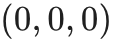 . The expansion of the universe (